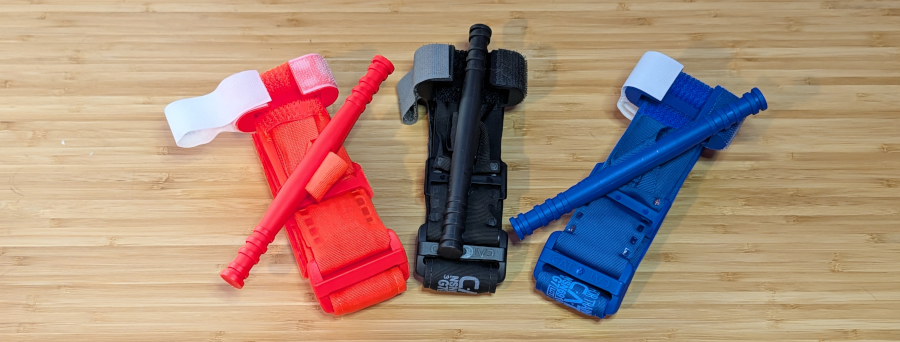
In one of my classes, a student asked me what the difference was between a training tourniquet and a regular one. At the time, I said that it was the quality of materials, but that’s not an entirely complete nor correct answer.
While the tourniquets that I use for classroom training do have a different feel, and are distinctly marked “for training only,” that’s not necessarily what dedicates them as training devices. The real answer to the question is, “a tourniquet intended for emergency use is one that you do not practice with.” You should never, ever practice with a tourniquet, and then stash it back into your kit for possible emergency use. This will degrade the materials over time, possibly leaving you with a tool that won’t perform its primary task when needed – to save someone’s life.
I’m going to say right now that whatever tourniquet you decide to put into your kit, make sure it is of high quality. This is not a component where you want to choose the least expensive option. Stick to reputable brands – North American Rescue, TacMed Solutions, or SAM Medical, to name a few. Of those, you will generally see three different colors – black, orange, and blue. Yes, you might occasionally see other colors, but it will mostly be those three.
So do the colors mean anything? Black will be your standard and most commonly used color, orange is for when you want higher visibility, and blue is intended to be an indicator of a training device. To be clear, the different colors are constructed the same, and are of the same quality. But you should avoid purchasing blue for your kit, and unless it’s coming straight from being unwrapped, using a blue tourniquet should be your last choice, since there is no way to tell how many times it’s been used before, and its integrity could be compromised. That’s why the tourniquets that I use in my class, even though they’re orange and not blue, are clearly marked as training devices.
The bottom line is, if you want a tourniquet to practice with, get a blue one, and use it often. Take the tourniquet you intend for emergency use, prepare it for rapid deployment, and keep it stored in the kit until it’s needed.

Comments are closed